
ಭಾನುವಾರದ ಎಣ್ಣೆ ಸ್ನಾನThe Sunday ritual many of us grew up with
A nostalgic look at the weekly oil bath ritual in Karnataka homes — warm oil, seegekai, hot water and an entire morning built around it.
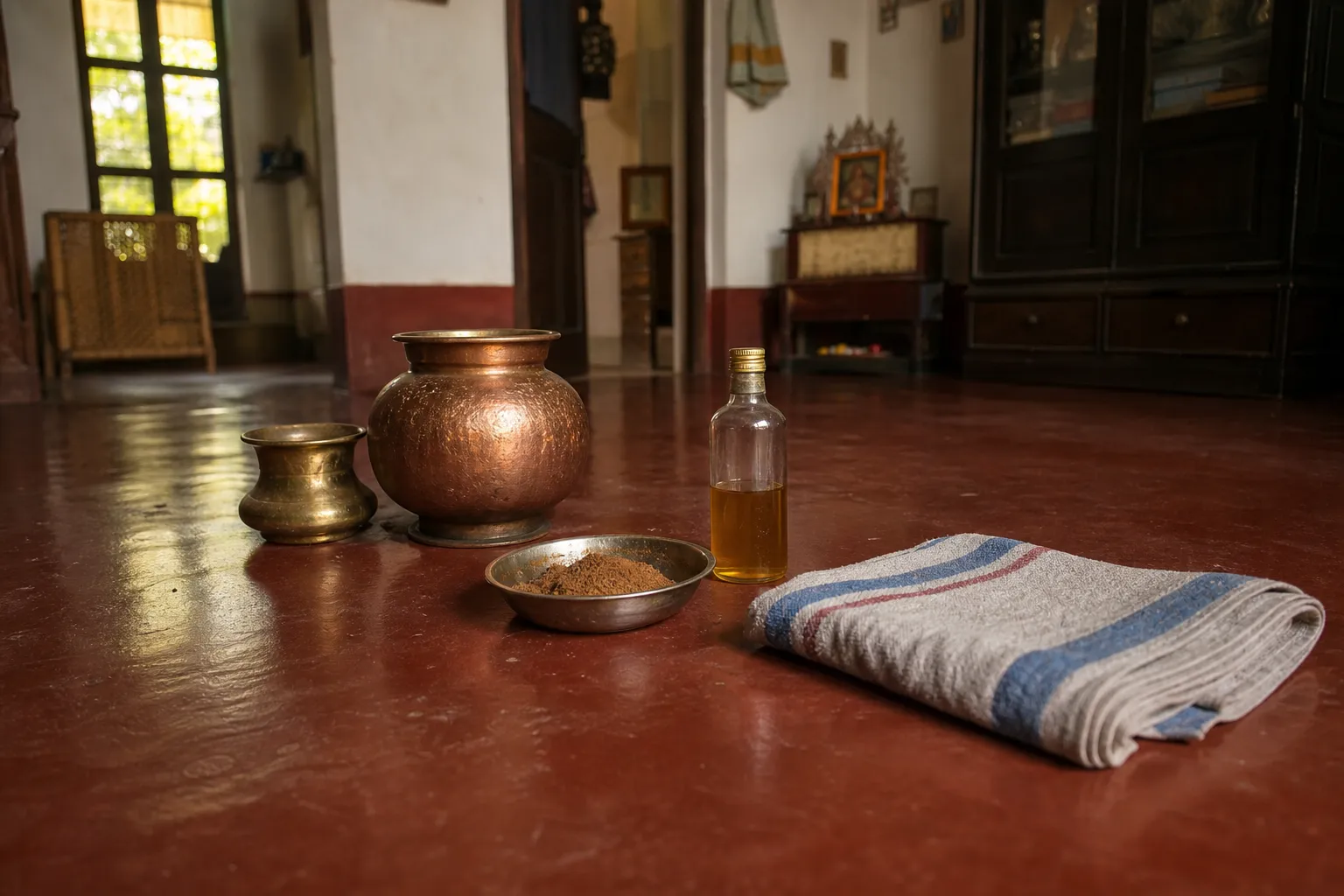
In many Karnataka homes, Sunday did not begin with a plan. It began with oil. Before the first cup of coffee had cooled, someone — usually a mother, an ajji, or an older sister — would warm a little coconut or gingelly oil on the stove and call the children one by one. The morning had a rhythm you could feel before you could name it.
You sat on a small wooden stool or on the red oxide floor. Warm oil went into the scalp first, worked in with firm fingers, then down the arms and legs. Hair that had spent the week in school dust and afternoon sun suddenly felt heavy and cared for. The smell of heated oil filled the bathroom and drifted into the courtyard. For a while, nobody was in a hurry.
The tools of an ordinary ritual
The objects were never glamorous. A copper or brass chembu of hot water. A steel bowl of seegekai powder, sometimes mixed with methi or green gram flour. A rough towel that had seen better years. If the family kept shampoo, it waited its turn; seegekai came first, rinsing the oil into a soft lather that left hair smelling faintly of the forest.
In winter the water had to be hotter. In summer it could be milder. Someone always tested it on the wrist. The bathroom door stayed half open so steam could escape and so ajji could keep an eye on the queue. Younger children protested; older ones pretended they had outgrown it and then quietly enjoyed the massage anyway.
It was never only about cleanliness. It was a weekly reset — body, hair, and the small household calendar.
A morning built around care
After the bath came the slow part: hair left open to dry in the sun on the katte or balcony, a light oil sheen still visible at the ends. Breakfast waited — often something simple, because the morning had already asked enough of the cook. Relatives who visited on Sundays knew not to arrive too early. The house was busy with towels and wet footprints and the particular quiet that follows hot water.
For girls, there might be a dab of turmeric on the face. For boys, a reminder not to jump into a cricket game until the hair dried. Elders spoke of joints, of “cooling the body,” of traditions their own parents had kept in villages where the well water was colder and the oil came from the family press. Science and belief sat beside each other without argument. What mattered was that someone made time.
What changed — and what remains
City apartments shortened the ritual. Showers replaced buckets. Bottled shampoo replaced seegekai for many households. Sundays filled with tuition, traffic, and streaming queues. Yet the memory holds with surprising clarity: the warmth of the oil, the scrape of the stool on the floor, the call of your name when it was your turn.
Some families still keep a softer version — an oil massage the night before, a leisurely bath without the full theatre. Others revive it when children come home from hostel, or when an elder visits and the old copper vessel comes down from the shelf. The objects are the same; the morning is rarer.
Writing about ಎಣ್ಣೆ ಸ್ನಾನ is not nostalgia for its own sake. It is a way of noticing how culture lives in ordinary care — in water temperature, in the patience of hands, in a day of the week that once belonged to the body before it belonged to the calendar. If you grew up with it, you can still smell the oil when someone mentions Sunday. If you did not, the story still explains something essential about Karnataka homes: love often arrived as warmth, applied carefully, from head to toe.
That is why this ritual belongs on a page about culture as much as any festival procession. Festivals are public. The oil bath was private, repeated, and almost invisible — until you left home and realised no one else quite knew how to begin the week the way your family did.