
Yakshagana: When Storytelling Becomes Spectacle
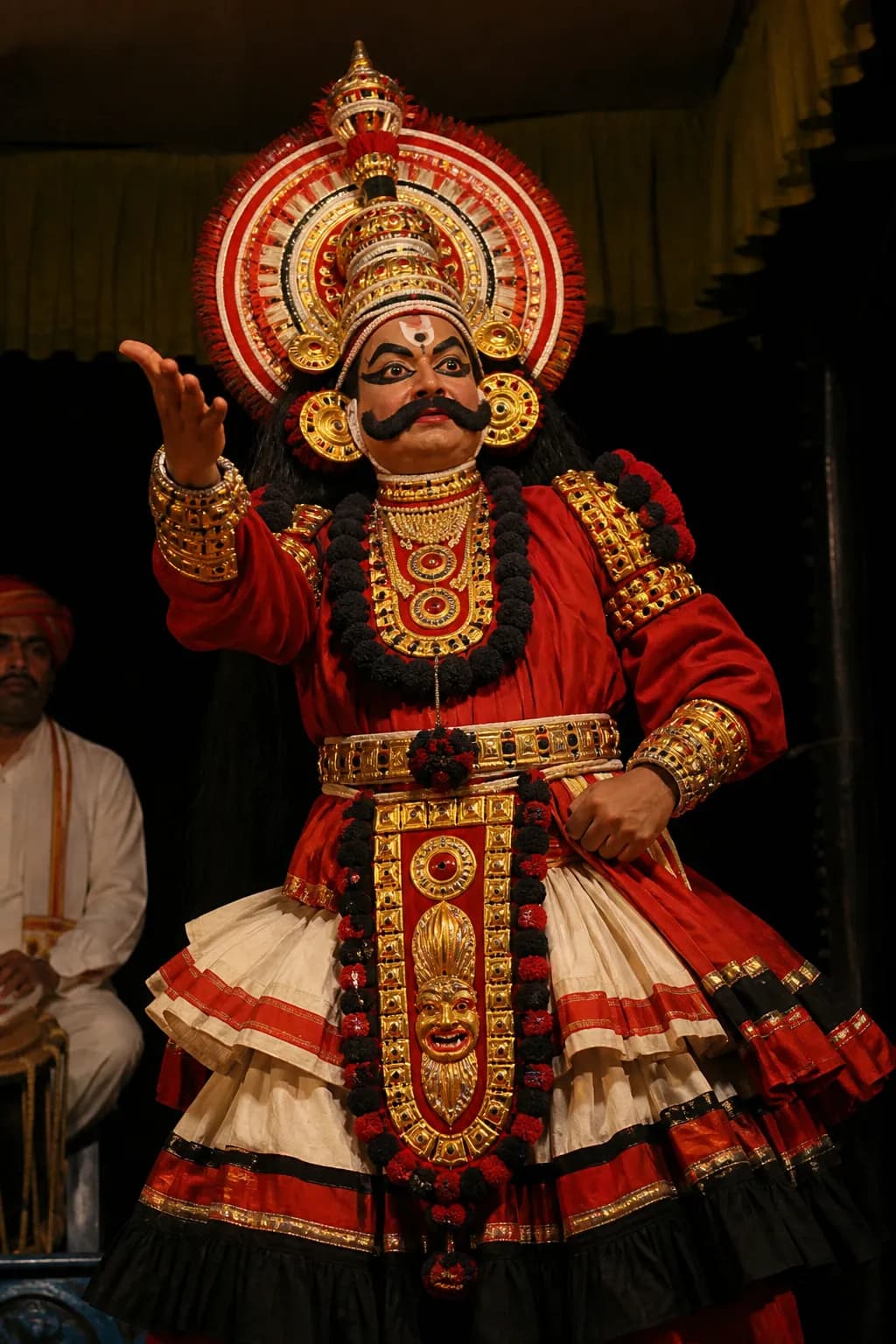
Night falls differently when Yakshagana is nearby. Generators hum. Makeup lamps cast a yellow island in the dark. A performer sits very still while another paints his face into a deity, a demon, or a hero who will not blink for hours. Outside the tent or open ground, children practise drum syllables under their breath.
Yakshagana is theatre, music, dance, improvisation, and endurance braided together. To call it only “folk performance” is to miss how sophisticated the craft is — and how alive the audience remains.
Costume as architecture
The kirita headgear alone can seem taller than the performer. Costumes expand the body into mythic scale: layered cloth, ornaments, belts, and colours that read clearly from the back row. This is not vanity. It is visual grammar for an all-night story. When a character enters, you should know their moral temperature before they speak.
Makeup is precision work. Lines must hold under sweat and lamp heat. Eyes are emphasised so expression carries. Badavas and other roles each have conventions; mastery means knowing when to obey them and when a slight variation will make the crowd lean forward.
The bhagavata and the battle of wit
At the centre of many performances sits the bhagavata — singer, narrator, conductor of energy. Drummers answer. Dancers stamp the ground into a pulse you feel in your ribs. Dialogue can be scripted in outline and alive in the moment; skilled artists spar with language, stretch a scene, or compress it if rain threatens.
Spectacle here is not empty dazzle. It is storytelling large enough for a village to sit inside.
Episodes from the Ramayana, Mahabharata, and Puranas dominate, but local tastes shape which scenes return each season. A good night balances war and comedy, devotion and teasing. Elders correct young performers with a look. Teenagers film on phones and still gasp when a jump lands clean.
Coastal roots, wider stages
Coastal Karnataka remains the heartland, yet Yakshagana travels — to city sabhas, school grounds, diaspora gatherings, and digital clips that never quite capture the dust and the 2 a.m. wind. Training still asks for years. Troupes still negotiate sponsorship, travel, and the economics of keeping an art form fed. The form changes venues; the contract with attention stays.
What has not thinned is the basic contract with the audience: stay, listen, answer with attention. When the final scene resolves and the lamps dim, people walk home carrying more than plot. They carry a shared night — the rare modern experience of watching something difficult together without pausing it.
Teachers still train students in dance steps, drumming patterns, and the ethical weight of portraying gods. A single night can run for hours; stamina is part of aesthetics. When a performer holds a pose under heavy costume, you are watching athleticism in service of story. Ask questions afterward if invited — many artists are generous teachers offstage.
Support troupes when you can — tickets, respectful applause, sharing accurate credits rather than anonymous clips. An art form this demanding needs audiences who understand that spectacle is labour. Pay for the night if you can; free clips online are a doorway, not a replacement.
If you have never been, go once without expecting museum quiet. Expect vendors, crying babies, brilliant exits, and a story that refuses to shrink to screen size. That refusal is the point. Yakshagana insists that some tales still need a whole body, a whole night, and a whole crowd — and Karnataka is fortunate that the insistence continues under open skies and rented generators alike.